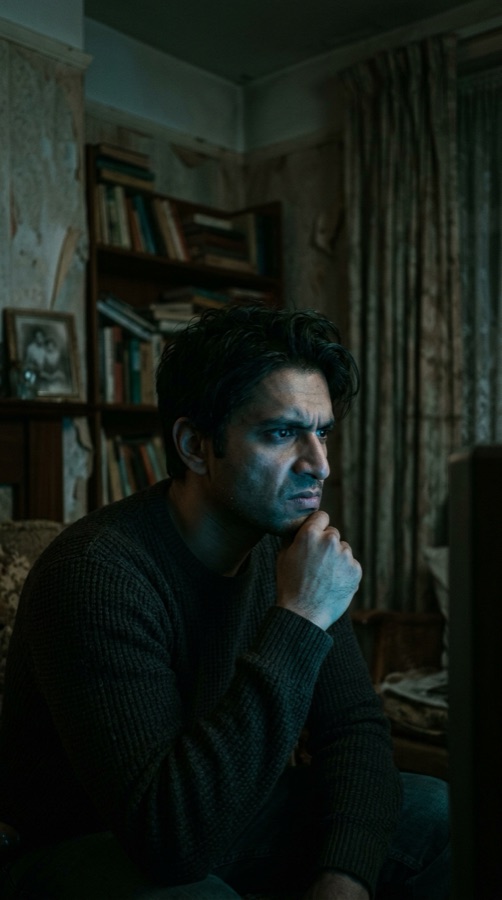
Ram Chugh
74 · Mid-30s · 8
A poet born to a Jain family in pre-Partition Punjab. He mixed paint on damaged cars to survive Bombay, and found colour. Radha was his muse and his reason. Without her, only the vow is left.
Dying with Equanimity
A limited series by Tan
Dying with Equanimity
After a terminal diagnosis, an old poet undertakes an ancient ritual — fasting into death with perfect equanimity — to cross back to the wife he lost.
The Practice
Santhara is the ancient vow of releasing the body — voluntarily withdrawing from food and water when death is already certain — to thin the passions of the flesh and meet the end awake, without fear.
“Death is not something that happens to you in the future. It is happening to you all the time. If you are aware in every moment, both life and death are involved.”
The Story
When Ram Chugh learns his heart is failing, he refuses a slow, medicated undoing. Instead he turns toward Santhara — the six-step path to a painless, deliberate death — hoping it will carry him back to Radha, the wife whose loss emptied the years out of him.
As the fast deepens, his mind loosens. Memory floods in out of order: a childhood torn apart by the Partition of 1947, a marriage that became his reason to live, the births of his children, the pyre that took their mother. His body thins; the veil between worlds grows translucent.
But his children will not let him go quietly. Snehit reads it as surrender. Sannah reads it as grace. Between them, the father tries to finish the one poem he has been writing his whole life — the story of what remains when everything else is given away.
Tone & Comparables
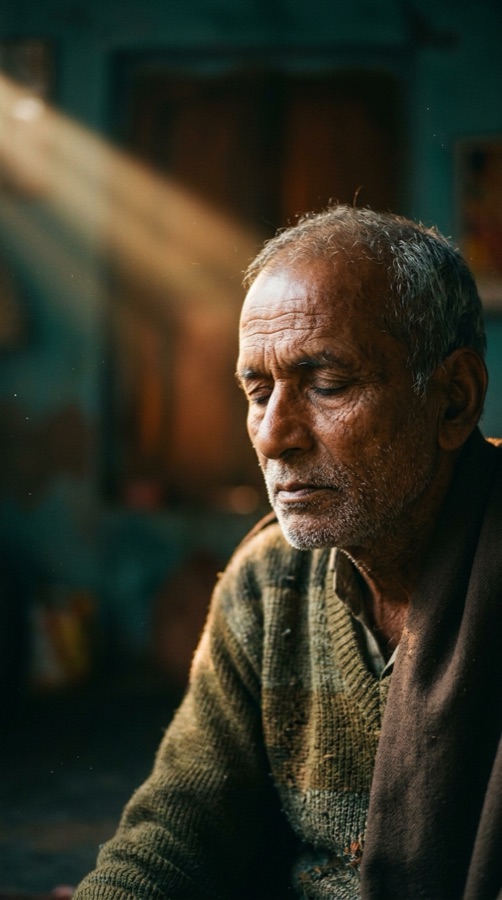
A melodramatic, surreal cocktail — heavy, luminous, unafraid of silence. The interior epic of a dying poet: the polarizing work of detaching from the body, told through the significant fractures of a life. Reverent where it can be, hallucinatory when the self dissolves.
The Ritual · Six Steps
Each movement of Santhara becomes a movement of the story — the outer discipline of the vow mirrored by the inner reckoning it forces open.
He resolves to die, and says it aloud — marking the vow apart from despair. Not an escape. A decision.
He asks pardon of everyone he has wronged, and forgives every wrong done to him. Old accounts, finally closed.
Before a saint at the cliffside temple, he speaks the vow of death — and is told to return only when he is ready.
He turns inward, toward the soul beneath the man — and the mind begins to give up its dead in vivid, uninvited waves.
Solid food, then liquid, then water — surrendered in turn. The body thins toward light; the family fractures around him.
In the final meditation the soul lets go of the body — and, if the vow held true, walks into the darkness to eat with the beloved for eternity.
“Why this game of life? The mind does not budge. We have played this game many times… the outcome is always the same. What remains, what is achieved — it is love. To eat in the darkness of each other's lives for eternity. After all — what is the story?”
— Ram Chugh, in the dissolution
The Family
74 · Mid-30s · 8
A poet born to a Jain family in pre-Partition Punjab. He mixed paint on damaged cars to survive Bombay, and found colour. Radha was his muse and his reason. Without her, only the vow is left.
34 · The Son
Fifteen when his mother died, he chose the safety his father never had. He cannot accept the choice to leave — and cannot forgive being asked to watch it happen.
26 · The Daughter
Raised on her father's lullabies and poems, now an artist in LA. She was seven at the pyre. She understands the wish to return to Radha — and blesses the road.
Structure
Six timelines wound together — the present ritual threaded through a whole century of a life, surfacing and dissolving as the fast loosens the grip of ordinary time.
The present frame — Ram beneath the tamarind tree, a broken kite in the branches, breath by breath.
Santa Maria, now. The failing heart, the family table, the drive to the cliffside temple.
The love that made a life — the marriage, the children, the hospital bed, the loss.
A DMT release — spirals, mantra, Kali. The mind gives up its images all at once.
Leiah. The refugee trucks, the checkpoints, a child learning what death is.
The world that was lost — the bazaar, the grandmother's temple, the kite on the tree.
Key Art
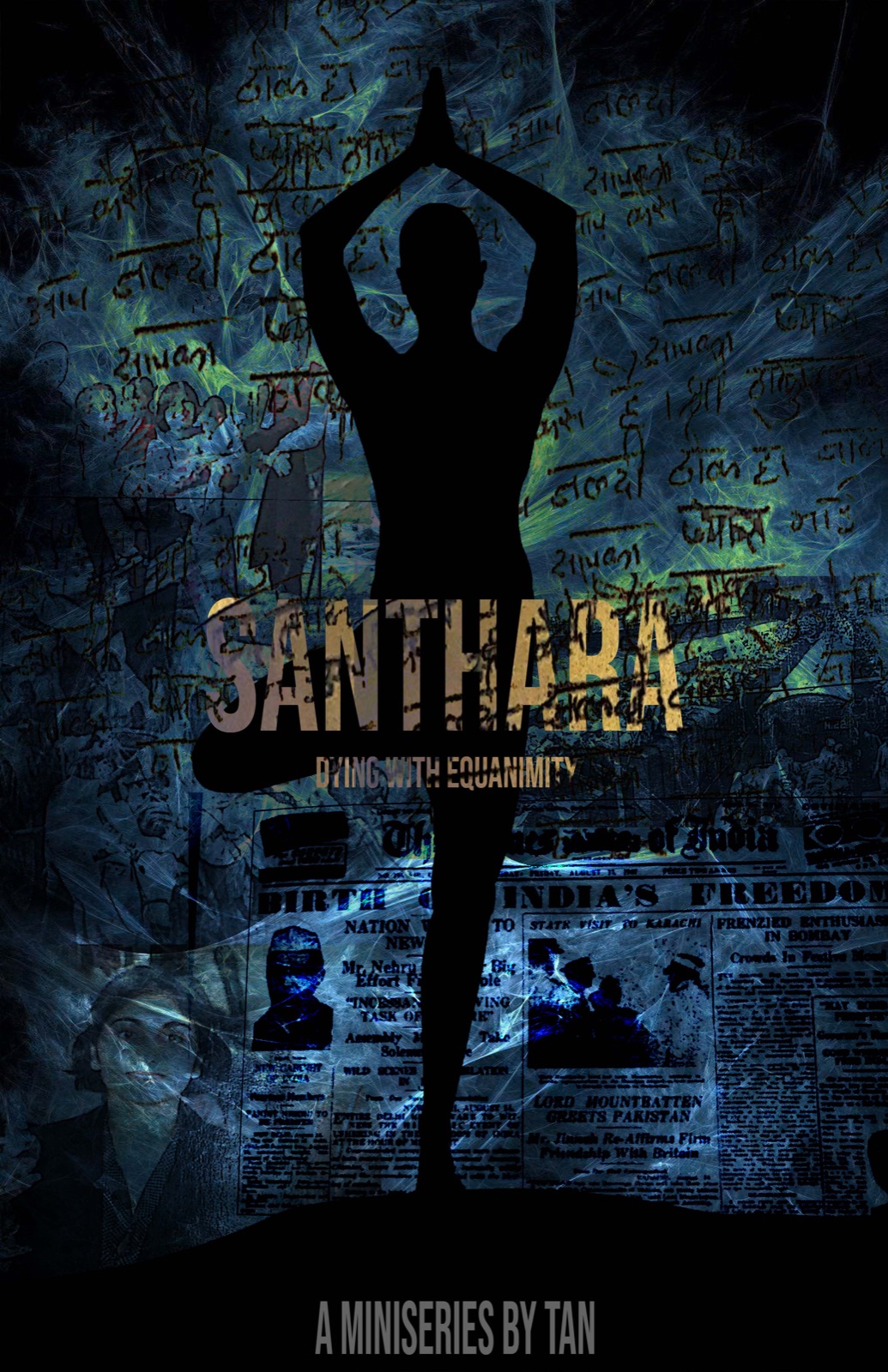
A single figure balanced in the flame of memory — the newsprint of a nation's birth burning behind him, the script of old prayers drifting like ash. One man, choosing the manner of his own ending.
“Santhara must be distinguished from suicide. It is undertaken only when the body can no longer serve as an instrument of dharma, and death is already certain.”
The Format
Episodes
Minutes each
Limited run
One soul, one vow
A prestige limited drama — literary, surreal, and unrepeatable.
The full script, series bible, and production materials are ready for the right partners. For financing, development, and rights — reach out directly.
empire@tan.wikiSANTHARA · A limited series by Tan